


Chatbot marketing is one of the simplest ways to answer visitors instantly, capture more leads and sell around the clock, without being glued to your inbox. But there’s a big difference between having a chatbot and having a chatbot strategy. A badly planned bot frustrates people and makes your business feel cold. A well planned one feels like a helpful assistant that never sleeps.
In this guide I’ll walk you through how chatbot marketing works, what a good bot should actually do, and the exact steps to plan, launch and improve one, even if you’re not technical.
Quick summary
- Chatbots answer common questions instantly, 24/7, and handle many conversations at once.
- Give your bot one or two clear jobs: support, lead capture, product recommendations or booking.
- Design short, friendly conversation flows, and always offer a route to a real person.
- Track engagement, completion and conversion rates, then improve the bot every month.
What Is Chatbot Marketing?
Chatbot marketing means using automated chat conversations, on your website, in Facebook Messenger, WhatsApp, Instagram or inside your app, to engage visitors, answer questions, capture leads and guide people toward a purchase.
Today’s customers expect fast answers. If someone lands on your site with a question and can’t get help while their interest is at its peak, they leave and buy somewhere else. You can’t personally reply to everyone around the clock, but a chatbot can.
Rule-Based vs. AI Chatbots: Which Do You Need?
There are two main types of chatbot, and picking the right one saves a lot of frustration:
- Rule-based chatbots follow buttons and pre-written paths (“Pricing”, “Shipping”, “Talk to support”). They’re predictable, cheap and perfect for FAQs, simple lead capture and booking.
- AI-driven chatbots understand free-text questions, context and intent. They handle more varied conversations and can personalize recommendations, but they need good source content and regular checking.
For most small businesses and bloggers, a focused bot with a few clearly defined jobs beats an overbuilt AI system that tries to do everything.
5 Ways Chatbots Grow Your Business
1. Instant answers, 24/7
A visitor arrives late at night and gets the answer straight away instead of bouncing. That alone can lift conversions, because you catch people at the moment they’re most interested.
2. Lead generation on autopilot
A chatbot can greet visitors, ask a couple of qualifying questions, offer a lead magnet and collect an email address, all in a natural conversation that feels far less pushy than a pop-up form.
3. Personalized product recommendations
By asking what someone needs (“What’s your budget?”, “How big is your team?”), a bot can point them to the right product or plan, just like a good salesperson would.
4. Time back for you and your team
Routine questions about prices, delivery, refunds and logins get handled automatically, so your time goes to the conversations where a human really makes a difference.
5. Insight into what customers want
Every chat is data. Repeated questions show gaps in your website copy, abandoned conversations show where people get stuck, and the greetings that perform best tell you what your audience cares about.
How to Build a Chatbot Marketing Strategy (Step by Step)
Step 1: Pick one clear objective
Decide what success looks like before choosing any tool. Is the bot there for support, lead generation, sales, bookings or information? One main goal keeps conversations short and results measurable.
Step 2: Choose where it lives
Put the bot where your audience already is: your sales pages, your highest-traffic blog posts, your checkout page, or the social channel where people already message you.
Step 3: Choose the right platform
Compare tools on ease of use, integrations (CRM, email marketing, e-commerce), customization, analytics, scalability, support and cost. Don’t pay for features you won’t use in the first three months.
Step 4: Design natural conversations
Write like you talk. Keep messages short, use buttons for common choices and make every path end in a useful answer or a clear next step. Give the bot your brand’s voice so it feels like part of your business, not a generic robot.
Example lead-capture flow
Hi there! 👋 Looking for something specific today?
Which plan is right for a small team?
For 3–10 people, the Growth plan is usually the best fit. Want me to email you a quick comparison?
Sure, and I have a billing question. → Connecting you with Sarah from our team.
Step 5: Plan the human handoff
This is where most bots fail. Automation should improve the customer experience, not remove people from it. Decide in advance which situations go straight to a person: complaints, complex questions, billing issues or anything sensitive.
Step 6: Launch, measure and improve
Launching is only the beginning. Track a few key numbers:
- Engagement rate: how many visitors start a chat
- Completion rate: how many reach the end of a flow
- Response time and handoff rate
- Conversion rate: leads, bookings or sales that come from chats
Then run a simple improvement loop every month: gather data → evaluate performance → spot weaknesses → improve and repeat.
Common Chatbot Mistakes to Avoid
- No clear purpose: a bot that tries to do everything ends up doing nothing well.
- Trapping people: always offer a way to reach a real person.
- Robotic tone: long, stiff messages kill conversations.
- Ignoring privacy: be clear about what data you collect and why.
- Set and forget: without regular reviews, answers go out of date and the bot gets less useful.
Want the Complete Chatbot Marketing Playbook?
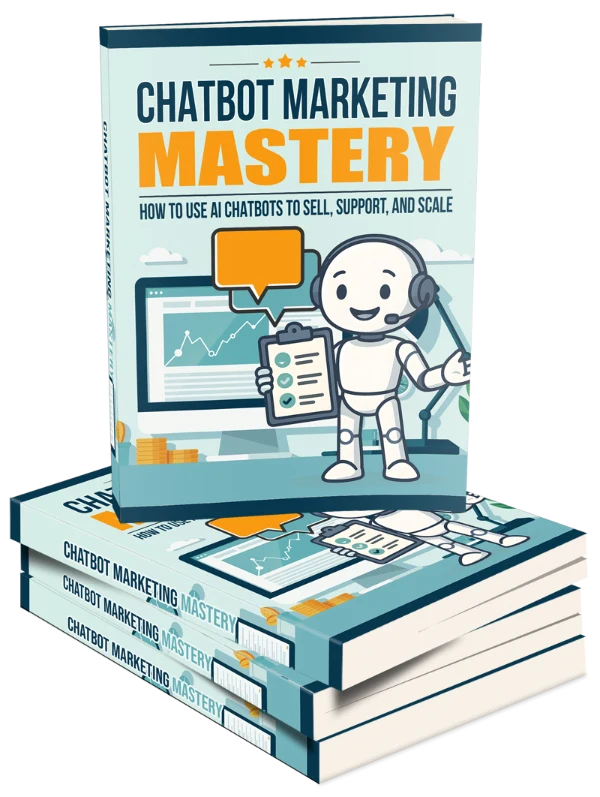
If you’d like to go deeper, I put everything into a practical, no-fluff guide: Chatbot Marketing Mastery: How to Use AI Chatbots to Sell, Support, and Scale. It covers the whole journey, from choosing the right chatbot and building your strategy to designing conversations, launching your bot and fixing common problems.
Frequently Asked Questions
Is chatbot marketing worth it for a small business?
Yes, as long as the bot has a clear job. Even a simple FAQ or lead-capture bot can answer visitors instantly, collect emails while you sleep and free up hours every week.
Do I need technical skills to set up a chatbot?
No. Most modern chatbot platforms use drag-and-drop builders. The harder part is strategy: knowing what the bot should do and how conversations should flow.
Will a chatbot make my business feel less personal?
Only if it’s done badly. Use your brand’s voice, keep messages short and always offer a route to a real person. Done right, customers get faster help and more attention when they need it.
How do I know if my chatbot is working?
Track engagement, completion, response times and conversions from chats. Review the conversations monthly to spot repeated questions and drop-off points, then improve the flows.
Final Thoughts
Chatbots let you respond faster, automate repetitive conversations, support customers, spot prospects and learn from every interaction. But the technology alone isn’t the advantage. Knowing how to apply it is. Start small: give your bot one clear job, launch it on your busiest page and improve it every month.
For more practical guides like this, browse my AI Tools articles, or check out the tools I personally recommend.
Disclosure: Chatbot Marketing Mastery is my own product. Results vary; see the earnings disclaimer.

