

Free Google traffic is still the best long-term source of buyers for affiliate marketers. People type their problem into Google, click the most helpful result and often buy within minutes. If that result is your article, you earn the commission without paying for a single click. AI now makes the research and writing part far faster than it used to be.
Disclosure: this post contains affiliate links. If you buy through them I may earn a commission at no extra cost to you.
This guide shows how to choose high-ticket offers, find keywords you can actually rank for, use AI without publishing thin content, and turn those visitors into commissions. It also covers a popular shortcut you should not use.
What “High-Ticket” Means for Affiliates
High-ticket affiliate offers pay larger commissions per sale, usually $100 or more, or pay a recurring commission every month a customer stays. Common types:
- Software (SaaS) with recurring commissions: email marketing, funnel builders, SEO tools, web hosting.
- Freelance and agency services, such as premium Fiverr Pro services for businesses.
- Premium courses and coaching programs with large one-time payouts.
Fewer sales are needed to make the same money, which makes SEO traffic, slow as it is to build, very worthwhile.
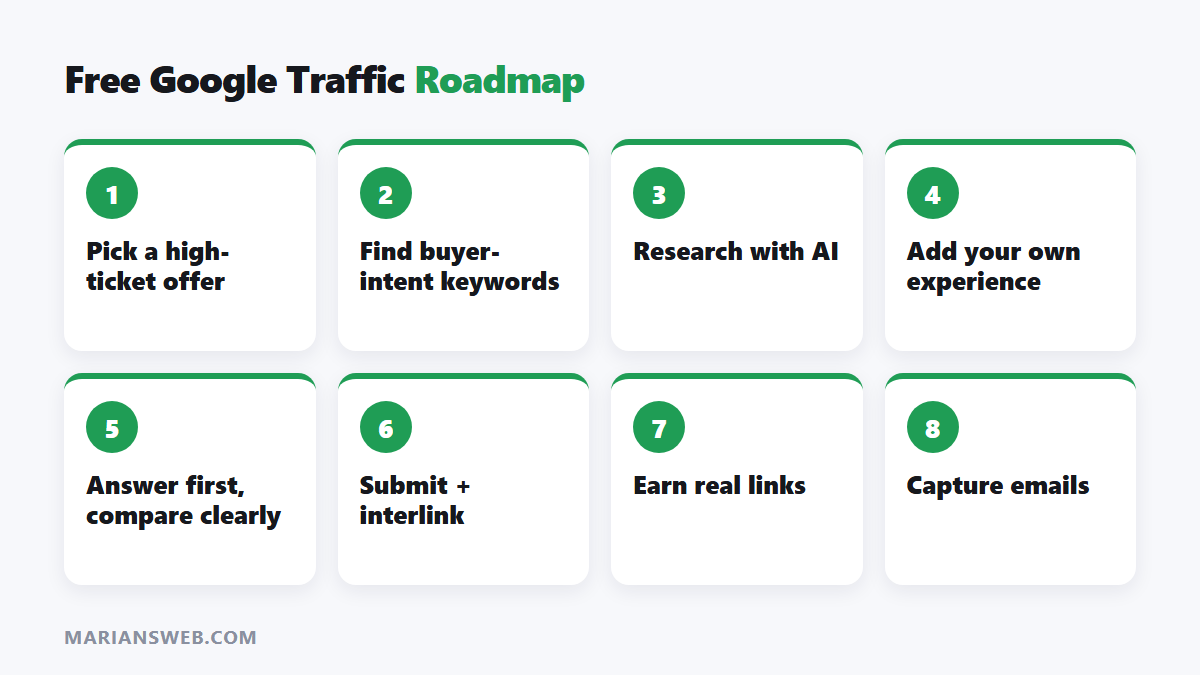
Step 1: Target Keywords With Buying Intent
Not all searches are equal. “What is SEO” brings readers; “best local SEO service for restaurants” brings buyers. Focus on these keyword patterns:
- Best X for Y: “best email marketing tool for coaches”
- X vs Y: “ConvertKit vs GetResponse”
- X review / X pricing: “Semrush pricing explained”
- How much does X cost: “how much does a restaurant website cost”
- How to hire X: “how to hire a Google Business Profile expert”
Use free tools to check them: Google autocomplete, the “People also ask” box, Google Search Console (once your site has some traffic) and free tiers of keyword tools. New sites should start with long, specific phrases where the current top results are forums or weak articles.
Step 2: Use AI for Research, Not as a Ghostwriter
Google’s guidance is clear: AI-assisted content is fine, but content made mainly to manipulate rankings without helping people is not. Use AI to work faster, then add what only you can add:
I’m writing a guide for the search “[keyword]”. List the questions this searcher needs answered, the comparisons they’ll want, the common mistakes they make, and the decision criteria they should use. Suggest an outline with H2 headings.
Then fill the outline with your own screenshots, prices you’ve checked, pros and cons you can explain, and a clear recommendation. That’s what makes an article rank and convert. My guide on writing better AI prompts helps you get more from this step.
Step 3: Build Pages That Convert
- Answer first. Give the short answer or top pick at the very top.
- Use a comparison table for price, best for, and key features.
- Explain who each option is not for. Honesty increases trust and clicks.
- Disclose affiliate links near the top of the page.
- Add an email opt-in so visitors who aren’t ready to buy can still join your list.
Step 4: Get Indexed and Ranked Faster
- Submit your sitemap in Google Search Console and request indexing for new posts.
- Link every new article from 2 to 3 related older posts (internal links).
- Keep pages fast: compress images and avoid heavy plugins.
- Update articles every 6 to 12 months with current prices and screenshots.
- Build a few genuine links: guest posts, podcast appearances, helpful answers on Quora and forums.
For more free traffic sources to combine with SEO, see free traffic tactics that cost nothing but time and Quora affiliate marketing.
A Local-Business Example
Many small businesses, like restaurants, salons and plumbers, struggle with their Google Business Profile and local rankings. Instead of chasing them, create content they’re searching for:
- “How to get more Google reviews for your restaurant”
- “Google Business Profile checklist for small businesses”
- “How much does local SEO cost?”
Each article can recommend vetted freelancers for owners who’d rather pay someone, for example top-rated local SEO services on Fiverr. My Fiverr affiliate program guide explains how those commissions work.
The Shortcut to Avoid: AI-Scraped Leads and Cold Emails
Some videos tell you to ask AI for “30 restaurants with weak Google profiles and their emails” and then cold-email them affiliate links. Don’t do it:
- AI chat tools often invent businesses and email addresses. The lists look real but many aren’t.
- Bulk cold email has legal rules. Laws like CAN-SPAM in the US and GDPR in the EU set strict requirements, and spam complaints can get your email domain blacklisted.
- Affiliate programs often ban spam. You can lose your account and unpaid commissions.
If you want to offer services to local businesses directly, do it properly: personalized, honest outreach to a few businesses at a time, offering real value first. Better still, let SEO bring them to you.
Step 5: Turn Visitors Into Repeat Buyers
Most visitors won’t buy on their first visit. Offer a free checklist or guide, collect the email, and follow up with useful tips and recommendations. My free guide The $0 Funnel shows how to set this up without paying for software.
Free Google Traffic FAQ
How long does SEO take?
New sites usually need 3 to 9 months to see steady traffic. Specific, low-competition keywords can rank sooner.
Is AI content penalized by Google?
Not by itself. Low-value content is the problem, whether a person or AI wrote it. Helpful, accurate, original content is what ranks.
Do I need a blog?
For Google traffic, yes, or at least a website with articles. YouTube videos can also rank in Google for some searches; see Amazon affiliate marketing on YouTube.
Start This Week
Pick one high-ticket offer, list 20 buyer-intent keywords, and publish your first genuinely helpful comparison article. Then link to it from your other posts and keep publishing weekly.
Earnings disclaimer: results depend on your niche, content quality, competition and effort. No income is guaranteed.